
Thank you for Subscribing to Healthcare Business Review Weekly Brief
× 
Healthcare Business Review Weekly Brief
Be first to read the latest tech news, Industry Leader's Insights, and CIO interviews of medium and large enterprises exclusively from Healthcare Business Review
A featured contribution from Leadership Perspectives: a curated forum reserved for leaders nominated by our subscribers and vetted by the Healthcare Business Review Advisory Board.

MemorialCare Long Beach Medical Center
Monitoring Beyond the ICU: Closing the Gap Between Acute Care and Recovery
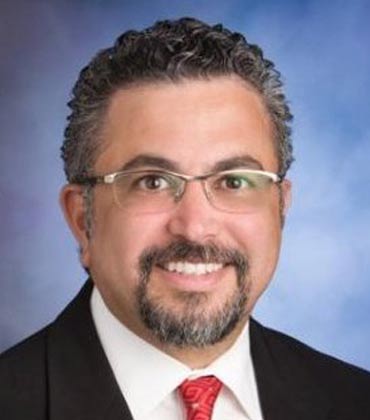
Maged A. Tanios
A patient leaves the ICU on a Tuesday morning. For days, every breath and heartbeat has been tracked in real time by a nurse caring for only one or two other patients. By that afternoon, the same patient is on a general ward, checked intermittently and sharing a nurse with several others. The patient’s vulnerability did not disappear at the doorway. Only the intensity of observation changed. One qualitative study described that moment as “care shock”: relief at leaving the ICU mixed with anxiety, uncertainty, and a sense of abandonment as the team that knew the illness in real time is no longer at the bedside. That feeling reflects something real. On general wards, intermittent spot-checks can miss clinically important episodes of hypoxemia and hypotension simply because no one is looking at the right moment. We have built an extraordinary system for watching people through the most dangerous phase of illness, then often provide a thinner one during the phase that determines whether they truly recover.
Monitoring Recovery, Not Only Vital Signs
More patients are surviving illnesses that once would have been fatal, but survival is not the same as recovery. Many leave the ICU with weakness, cognitive changes, psychological distress, medication complexity, and loss of independence—problems that unfold over weeks or months and are easily missed when monitoring remains fixed on pulse, blood pressure, and oxygen saturation. Monitoring should evolve with the patient. In the ICU, the priority is physiologic instability. On the ward, it should expand to mobility, delirium, nutrition, medication tolerance, and discharge readiness. At home or in rehabilitation, the relevant signals shift again to strength, cognition, functional progress, caregiver capacity, adherence, and early warning signs of deterioration. These are not separate systems. They are phases of one recovery pathway, and each phase needs its own definition of expected progress.
A Handoff Must Transfer Accountability
Acute and post-acute care remain separate worlds, with distinct teams, records, workflows, and definitions of success. The ICU team’s direct responsibility ends at transfer, but the patient’s recovery does not. The next team may receive a discharge summary without the full story: how long the patient was sedated, whether delirium persisted, what the family was told to expect, and which risks remain unresolved. A meaningful handoff must do more than transmit information. It should communicate the patient’s pre-illness and current functional status, expected recovery trajectory, major medication changes, pending results, and triggers for escalation. Above all, it must identify who is responsible for each next step. A handoff is not complete when information is sent. It is complete when responsibility is understood and accepted.
A meaningful handoff must do more than transmit information. It should communicate the patient’s pre-illness and current functional status, expected recovery trajectory, major medication changes, pending results, and triggers for escalation.
The Patient as the Continuous Stakeholder
Clinicians, institutions, and care settings change. The patient— and often the family caregiver—is the only stakeholder present throughout the entire journey, yet is often the last to receive the context clinicians take for granted. Patients should understand what happened during hospitalization, what recovery should reasonably look like, which medications changed and why, what changes require attention, and whom to contact when progress goes off course. Families should be prepared for the practical and emotional realities of recovery, not simply handed instructions on the day of discharge. This does not mean transferring the burden of coordination onto patients. It means giving them the information and the standing to participate meaningfully in their own recovery. A patient who can say, “This is not my expected course,” or a family member who notices a subtle decline may provide the earliest signal that a care plan is failing.
Technology Without Ownership Is Only Data
Wearable sensors and remote-monitoring platforms may extend physiologic surveillance beyond high-acuity units, and studies are evaluating whether they can support safer discharge decisions. But collecting more data does not create continuity. Someone must interpret the signal, place it in context, and act. Less glamorous models have often shown the clearest value. In controlled studies of high-risk older adults, programs in which the same advanced practice nurse followed patients from hospitalization into the home reduced rehospitalizations and healthcare costs. The lesson is broader than any single staffing model: continuity improves when someone remains accountable across settings, not when more devices are attached to the patient.
Targeting Support to Risk
Not every ICU survivor needs the same intensity of followup. A better approach identifies high-risk patients early and matches them to the support most relevant to their expected impairments. Targeted recovery programs for cardiac arrest survivors offer a model worth adapting: define a high-risk population, establish a longitudinal plan, and connect patients with the disciplines most likely to be needed.
Closing the Continuum
Patients who survive critical illness deserve a recovery monitored as closely as their crisis was. Closing that gap requires handoffs that transfer accountability, monitoring that follows the recovery journey rather than stopping at the ICU door, and patients and families empowered to speak up when progress deviates from the plan. This is not primarily a technology problem. It is a design problem, and one healthcare leaders are well positioned to solve.
The articles from these contributors are based on their personal expertise and viewpoints, and do not necessarily reflect the opinions of their employers or affiliated organizations.
