
Thank you for Subscribing to Healthcare Business Review Weekly Brief
× 
Healthcare Business Review Weekly Brief
Be first to read the latest tech news, Industry Leader's Insights, and CIO interviews of medium and large enterprises exclusively from Healthcare Business Review
A featured contribution from Leadership Perspectives: a curated forum reserved for leaders nominated by our subscribers and vetted by the Healthcare Business Review Advisory Board.

UAMS
The Delicate Balance between Audiology and Otolaryngology
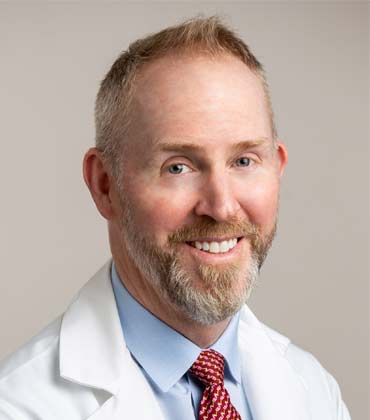
Gresham Richter
Gresham Richter is a professor and vice chair of Otolaryngology-Head and Neck Surgery at the University of Arkansas for Medical Sciences (UAMS). He completed his residency in otolaryngology at UAMS and his fellowship in pediatric otolaryngology at Cincinnati Children’s Hospital. Dr Richter returned to Arkansas to join the UAMS faculty and founded the Center for the Investigation of Congenital Aberrancies in Vascular Development and is now co-director of the Arkansas Vascular Biology Program. He has published numerous manuscripts and books in the realm of pediatric ENT.
Through this article, DR. Richter shares his insights on current trends in audiology and the development of collaborations between audiology and otolaryngology.
What is your perspective on the current status of the audiology space?
There is a strong relationship between audiologists and children’s hospitals. We deliver our service to patients within our clinic to facilitate the periodic sharing of patients throughout the day. They see an audiologist if they have any hearing concerns. They get an audiogram and visit our clinic for rehabilitative or surgical options. If they have hearing loss, we approve hearing aids for the patients and other rehabilitative options like cochlear implants and mild ear implants.
The process of fitting and dispensing a hearing aid involves a collaborative team. The otolaryngologist takes the leadership role, while other team members include the audiologist, who brings expertise in evaluation and rehabilitation, and the hearing aid dispenser, who possesses a more intimate knowledge of the hearing aids and is actively engaged in the fitting and sales of hearing aids. We work hand-in-hand to ensure that people traveling a long distance can visit us without the need to come another day for audiology after having already seen us.
hen we perform invasive surgeries, like bone-anchored hearing aids and implants, audiologists act as paramedical assisters and offer specialized audiology services. They make sure the patients get the proper devices that fit well. They play a vital role as we couldn’t do it ourselves.
Have you noticed any recent trends in the field of audiology?
Audiologists are gaining more responsibility over the years in terms of patient care. They look at the ears themselves and clean them before doing an audiogram. Now, they diagnose hearing concerns and treat them on their own. They should still have an emergency medical technician (EMT) involved to be able to do a thorough evaluation of the anatomy and hearing function of those patients. However, I see a national trend for audiologists to be more independent.
The industry is experiencing growth and evolution due to technological advancements, ranging from software solutions designed for audiologists to Bluetooth-enabled hearing aids. Patients have numerous options, including traditional hearing aids and over-the-counter (OTC) devices, which have become prevalent. Tech improvements are allowing audiologists to provide better hearing tests and individualized solutions. Each advancement, such as the capabilities of AI, enhancements in rechargeability, and increased accessibility to new over-the-counter devices, enables reaching a growing number of individuals with hearing loss.
Are you part of any organization that works to make these trends successful?
I was the past president of The Society for Ear, Nose, and Throat Advances in Children (SENTAC). It is an interdisciplinary society of health professionals interested in ear, nose, and throat diseases in pediatrics, including communication disorders. Its membership includes physicians, nurses, speech therapists, audiologists, and social workers. The meeting provides a forum to present and exchange ideas and information during a conference where they collaborate and explore new treatment ideas among its members to improve the lives and health of children with ear, nose, and throat concerns across the globe.
Its uniqueness has gained traction lately and has built the relationships between audiology and ENT over the years. I highly recommend people in this field to become a part of it. It’s a great way to collaborate and learn from each other.
How do you envision the future of audiology space a couple of years down the line with all these potential disruptions and transformations?
I see greater relationship-building between ENT and audiology. We have very similar mindsets in the way we approach patients now. And it's not a separate service. If we collaboratively enhance the care provided to the children, we will collectively experience improved well-being. I see that continuing to grow, especially with organizations like SENTAC.
Is there a piece of advice that you'd like to give to your peers and upcoming professionals in this field?
My guiding principle to my peers and professionals would be to bring in more collaboration. We could provide a comprehensive approach to patient care. It allows us to provide comprehensive assessment and therapy for people with complex issues.
The articles from these contributors are based on their personal expertise and viewpoints, and do not necessarily reflect the opinions of their employers or affiliated organizations.
