
Thank you for Subscribing to Healthcare Business Review Weekly Brief
× 
Healthcare Business Review Weekly Brief
Be first to read the latest tech news, Industry Leader's Insights, and CIO interviews of medium and large enterprises exclusively from Healthcare Business Review
A featured contribution from Leadership Perspectives: a curated forum reserved for leaders nominated by our subscribers and vetted by the Healthcare Business Review Advisory Board.

AccentCare
How AI Is Helping Hospice Care
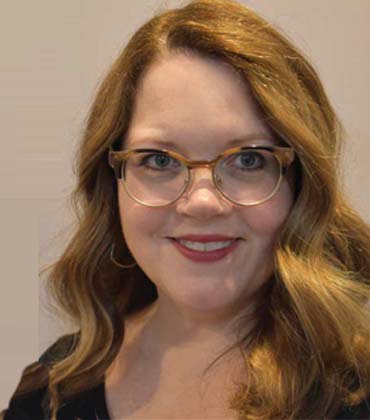
Charlotte Mather
Charlotte Mather, RN, BSN, MBA, FACHE, RWJF-ENF Charlotte is the Vice President of Nursing – Hospice at AccentCare. She has completed both her BSN and MBA from Oakland University in Rochester, Michigan, as well as an Executive Certificate in Negotiation from Notre Dame. She is a Fellow of the American College of Healthcare Executives and a Robert Wood Johnson Foundation Executive Nurse Fellow.
Charlotte was awarded the Nightingale Award for Nursing from Oakland University in the Distinguished Alumni category. She holds membership in Beta Gamma Sigma, the exclusive business honor society which recognizes academic excellence in business studies.
Artificial intelligence (AI) and machine learning are helping detect diseases faster, culling vital information for treatment plans and aiding clinicians. But how can it help hospice care? At AccentCare, we provide home health, hospice and personal care services to thousands of patients, nationwide. As Vice President of Nursing for Hospice at the organization, I know the decision to choose hospice care is not an easy one for patients and families. Hospice is also a difficult profession both emotionally and physically for our clinicians and hospice teams. It’s my job to look for ways to make the hospice experience smoother for patients, families and our team. Implementing this unique AI program for our clinicians to utilize has helped in the care of hospice patients.
This revolutionary AI program is called Muse. It was developed by a company called Medalogix, based in Nashville, TN. This tool helps us utilize technology to act like an extra set of eyes for our clinicians. I like to think of it as having an experienced nurse standing alongside our clinicians, giving patients and families timelier, more responsive care when they need it the most, at the patient’s end-of-life journey.
How does it work? Well, it’s very data driven. Muse looks at all the patient’s vitals, medications, physical assessments and clinician notes and then scrubs it through the predictive analytics software. This tool looks at hundreds of points within the electronic medical record (EMR), in fact, it pulls from over nine hundred data points. From this information, Muse is able to rate the patient’s condition on a non-critical or urgent scale. They are placed in 1 of 8 care categories based on what MUSE learns from the data. When a patient is placed in the highest category “critical,” the patient’s likelihood of dying in the next 7-12 days is greater than 90%.
As the intelligence platform categorizes and Charlotte Mather emphasizes those patients who would most benefit from additional visits or urgent care, it also alerts the care team when there has been a sudden decline in condition. One example of a decline in condition would be when the patient has a notable change in pain medication.
The AI platform notices that as it constantly analyzes and conducts deepneural machine learning. It’s continually gaining knowledge about the patient and updating what it knows about their condition. This eventually provides better insights on patients for the care team.
Our goal is to be there for the patients, so they receive the right care at the right time. This innovative technology allows AccentCare to quickly identify patients in decline and proactively recognize that we have a hospice patient that is having a significant change. It gives us a bird’s eye view, allowing us to view key patient-information quickly and efficiently. It allows us to send the right clinicians with the right experience at the right time for the patient and their chosen families. It helps us help them with making decisions and determining situations like meeting with that important friend or family member one more time, completing a spiritual or religious ritual, a legacy project or helping with their final arrangements. The information also gives loved ones or family members time to make travel plans if they don’t live nearby or are out of town and want to be there at the patient’s last moments.
I like to think of it as having an experienced nurse standing alongside our clinicians, giving patients and families timelier, more responsive care when they need it the most, at the patient’s end-of-life journey
With Muse, as an extra set of eyes on the patient, the information that AI brings to the table helps hospice clinicians better prepare the family for the patient’s final journey. We are able to inform families sooner. It allows us to prepare them for what’s coming next and to give the patient the right care at the right time.
In Hospice care, this technology helps our patients have the best possible end of life experience. Clinicians are able to better understand what the patient’s disease trajectory is. Many clinicians say this is an incredible asset and valued in hospice care. We can be more prepared to care for hospice patients. So, the future is bright as we harness technology and use it to our advantage in the health care industry to care for patients.
The articles from these contributors are based on their personal expertise and viewpoints, and do not necessarily reflect the opinions of their employers or affiliated organizations.
