
Thank you for Subscribing to Healthcare Business Review Weekly Brief
× 
Healthcare Business Review Weekly Brief
Be first to read the latest tech news, Industry Leader's Insights, and CIO interviews of medium and large enterprises exclusively from Healthcare Business Review
A featured contribution from Leadership Perspectives: a curated forum reserved for leaders nominated by our subscribers and vetted by the Healthcare Business Review Advisory Board.

Pipeline Health System
Into the Healthcare Spectrum and Beyond
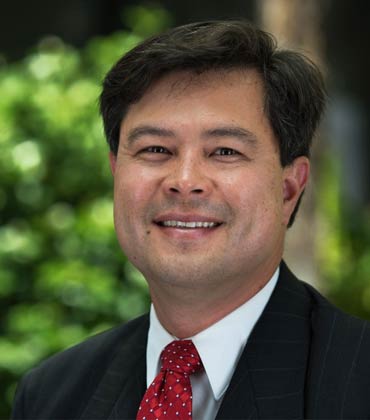
Vincent W. Green
Vincent W. Green is a board-certified emergency medicine physician with over two decades of clinical experience. He currently serves as the Chief Medical and Informatics Officer at Pipeline Health System. Green plays a key role in bridging communication between physicians and non-physician leaders, fostering collaboration and mutual trust to advance patientcentred care and organizational performance.
The First Steps toward Leadership
I began my career as an emergency physician but was soon drawn to healthcare administration. Rather than following a conventional administrative path, my journey to becoming a Corporate Chief Medical Officer was shaped more by hands-on experience and real-world challenges. Early in my career, I worked on projects focused on improving clinical documentation and collaborating closely with coders. From there, I started collaborating with quality and risk management teams, gradually assuming more responsibility. That progression led to my appointment as the Associate Chief Medical Officer and eventually to my current roles, including Corporate Chief Medical Informatics Officer at Pipeline Health.
Now, I oversee a wide range of quality initiatives, managing the peer review process to help our hospital meet important standards and regulations. I mostly work with our medical staff offices to guide physician credentialing and onboarding. On top of that, I’m actively involved with our managed care division, particularly overseeing the management of capitated patients.
A significant part of my role is to serve as a liaison between clinical and administrative teams. I make sure doctors’ perspectives are heard in leadership meetings and help clinical and administrative leaders align their perspectives.
Healthcare at Crossroads
In healthcare administration, miscommunication is a huge barrier, even though both sides are working toward the same goals. So, I always try to bridge that gap and foster a shared understanding to make better decisions and provide better care.
As change inevitably creates uncertainty, it is our responsibility to identify those impacted, understand their concerns and educate other leaders to build the support needed — especially when it benefits patient care
As our healthcare system grapples with significant challenges in workforce shortages and reimbursement rates, many hospitals are left uncertain about their ability to deliver high-quality care. For example, during the COVID-19 pandemic, many physicians retired, creating gaps in certain specialties, such as radiology. I witnessed firsthand how these retirements strained our department and made it harder to provide timely care for patients.
While the government is now trying to reduce its spending due to the big federal deficit, it’s cutting the money it pays hospitals and doctors. However, top-tier hospitals are generally able to absorb this change, while those operating on thin margins often struggle. This makes it imperative for leaders to adapt quickly to financial pressures and staffing shortages, which are making our industry increasingly complex to navigate.
New Trends and Adaptation
I see that the industry is exploring AI just as many other sectors are doing. Particularly, telemedicine platforms have become an essential part of the modern health ecosystem. Before the pandemic, the use of telemedicine was limited to supporting stroke care, where neurologists needed to act fast. But after that, it drove the widespread adoption of remote medical services across nearly all medical specialties. Many physicians were understandably cautious about exposure, and virtual platforms gave them a way to continue delivering care safely.
At our hospital, we recognized that telemedicine could help address physician shortages, particularly in small ICUs that cannot support a full-time intensivist. By leveraging remote critical care physicians, we were able to care for more patients and keep our standards high. Now, the integration of telemedicine into our daily operations is no longer an experiment; it is an integral part of our daily care delivery.
Advice for Aspiring Leaders
To navigate the modern healthcare environment, leaders must possess patience and persistence, as the effort is worthwhile when it leads to improved patient care. As change inevitably creates uncertainty, it is our job to find out who’s affected, listen to their concerns and help other leaders get on board.
When I implement new programs or deal with changes, I always consider how people will be affected and what the underlying politics are. For instance, when I helped launch our tele-ICU program at Pipeline Health, some of the community pulmonologists felt their roles were being threatened. It caused a lot of pushback and people spreading wrong information about the program. But I focused on figuring out who might be affected by the change and who would benefit from it.
With that in mind, I connected with key stakeholders to clarify our intentions. Despite all the challenges we faced, the tele-ICU program ultimately brought more advantages than drawbacks for our patients, and I’m proud we were able to move it forward. This experience has shaped every step of my career: with good communication comes the ability to build strong support and overcome resistance.
The articles from these contributors are based on their personal expertise and viewpoints, and do not necessarily reflect the opinions of their employers or affiliated organizations.
