
Thank you for Subscribing to Healthcare Business Review Weekly Brief
× 
Healthcare Business Review Weekly Brief
Be first to read the latest tech news, Industry Leader's Insights, and CIO interviews of medium and large enterprises exclusively from Healthcare Business Review
A featured contribution from Leadership Perspectives: a curated forum reserved for leaders nominated by our subscribers and vetted by the Healthcare Business Review Advisory Board.

Christie Gardens
Leadership That Listens: Building the Future of Care Through People, Not Just Systems
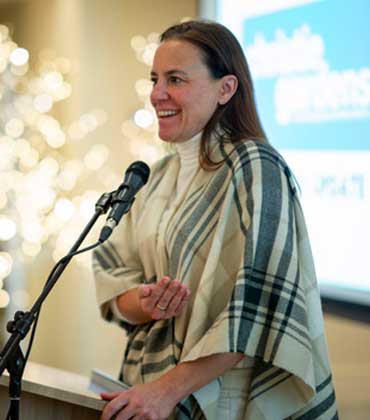
Heather Janes
For years, healthcare leadership has been defined by the ability to manage complexity, balancing budgets, staffing models, and regulatory demands while maintaining quality care. That definition is no longer sufficient. Today, the most effective leaders are not just managing systems, they are reshaping them around the people they serve and the teams who deliver that care every day.
What I have seen, particularly in seniors’ care, is that the gap between what the system was designed to do and what it is now being asked to do continues to widen. We are supporting an aging population with more complex needs, while facing persistent workforce shortages and increasing expectations from families. These pressures are not temporary. They are structural. They require leadership that is willing to move beyond incremental change.
If We Want To Build Resilient Organizations, We Must Create Environments Where People Feel A Sense Of Purpose And Belonging.
At Christie Gardens, we have learned that innovation does not always start with technology or large-scale transformation. Often, it starts by listening more closely to residents, to families, and to frontline teams. Some of our most meaningful progress has come from rethinking how we support and develop our workforce. Through initiatives like our intergenerational classroom partnership with the University of Toronto, we are not only helping to address staffing challenges, but also reshaping how the next generation understands and values careers in elder care.
This points to a broader shift in leadership mindset. Strategy cannot exist in isolation from culture. If we want to build resilient organizations, we must create environments where people feel a sense of purpose and belonging. In healthcare, where the work is inherently human and often demanding, culture is directly tied to outcomes. When teams feel supported, they deliver better care. It is that simple.
At the same time, leaders must be comfortable challenging long-standing assumptions about how care is delivered. The traditional models we rely on were not designed for today’s realities. Whether it is integrating more community-based services, leveraging technology to extend care beyond physical walls, or redesigning roles within care teams, progress requires a willingness to rethink the fundamentals.
There is no single solution to the challenges facing healthcare. But there is a common thread among organizations that are moving forward. Leadership must be grounded in values, clarity, empathy, and action. It is about making deliberate choices, communicating them transparently, and bringing people along in the process.
The future of healthcare will not be defined by those who manage the status quo, but by those who are willing to question it and build something better in its place.
The articles from these contributors are based on their personal expertise and viewpoints, and do not necessarily reflect the opinions of their employers or affiliated organizations.
