
Thank you for Subscribing to Healthcare Business Review Weekly Brief
× 
Healthcare Business Review Weekly Brief
Be first to read the latest tech news, Industry Leader's Insights, and CIO interviews of medium and large enterprises exclusively from Healthcare Business Review
A featured contribution from Leadership Perspectives: a curated forum reserved for leaders nominated by our subscribers and vetted by the Healthcare Business Review Advisory Board.

The Royal Melbourne Hospital
A Successful Framework For Bringing Start-Ups In To Hospitals
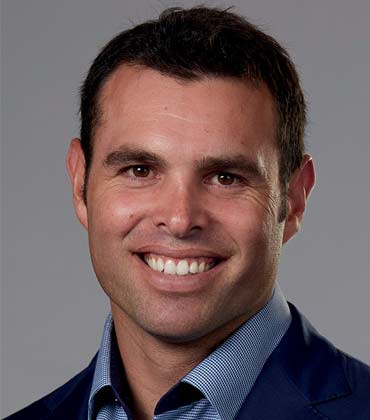
Ingrid Winship
Conductor Benjamin Zander famously wrote in his leadership book, “The Art of Possibility,” of the concept of leading with possibility and in giving his students an “A” from the outset. In giving an “A” to his students, he hopes to create a situation where they live into the possibility of their musicianship and studies. He also states in the book: “everyone loves classical music. They just don’t know it yet.” Perhaps it is my deep and abiding love of music, and the combination of art and science that creates beautiful music, that allows me to envision the same opportunity for medicine and telehealth and possibility for virtual patient care created by the pandemic. Like Zander, I’d give telehealth an “A” during this present time. How are we living into telehealth’s potential in this present time and what can we do to create the possibility of “everyone loving (telehealth); they just don’t know it yet.”
 Agility - During the earliest stages of the pandemic, when office doors were shuttered due to lack of protective personal equipment and testing, telehealth was expanded immediately and locally by most health systems and community practices. Suddenly year-long strategies were turned into one to two-week sprints for provider connection to patients and communities, especially in primary care and behavioral health practices. Overnight, barriers such as state regulations and federal rules on who could conduct telehealth and virtual visits and from what location, were suspended in the interest of caring for patients in our local community. Meaningful connections were made to address social and medical isolation, answer rapidly evolving questions about the COVID-19 pandemic,
assess social determinants of health and health equity and communicate with all patients to avoid unnecessary emergency department and urgent care utilization.
"THIS ARTICLE DESCRIBES SOME OF THE KEY DESIGN FEATURES OF THE PROGRAM, AND DISCUSSES SOME OF THE FINDINGS OF THE MHX EXPERIENCE WHICH MAY FORM THEBASIS FORADOPTION OF THIS TYPE OF INITIATIVE BY OTHERS"
Access - At Meritus Health (an independent, 300 bed community hospital in Hagerstown and Washington County, Maryland), we rapidly used the electronic health record portal for COVID testing registration and when available, for vaccination efforts. This increased the use of the portal to well over 70%. This was a boon for telehealth, as we used the portal as a tool initially for consent to telehealth visits, but then expanded it to include the assessment of patient isolation and loneliness, other social determinants of health such as transportation, housing, and food security, and as a means to assess patients at rising risk for worsening health outcomes due to the pandemic. Telehealth allowed access to the health system for patients who had to overcome barriers to access in the past and, for various reasons, could not reach traditional venues of care. Behavioral Health counselors and providers were able to help their patients stay connected to therapy for anxiety, depression, and substance use disorders. Virtual Home Visits provided valuable insights to providers assessing their patients’ well-being. Telehealth became a part of the strategy of the mobile health clinic outreach to all members of the community. Family Medicine Resident Physicians assisted the vaccine outreach and overcoming misinformation initiatives started here by conducting virtual town halls to diverse populations.
A virtual telehealth clinic from 7 PM-Midnight every day of the week was started after urgent care closed, just to create further access for patients in the community and also to drive down unnecessary emergency department utilization. Telehealth has been piloted to improve transitions of care from the hospital tothe community, rehabilitation centers, and skilled nursing facilities. Care remained local, accessible, and trusted due to this new tool.
AI – As telehealth has been widely adopted for access, it now must be further adapted to augment human intelligence. Digital transformation and monitoring of health conditions has been catapulted ahead by the pandemic and must go further to promote value-based care transformation and to help manage upstream anddownstream risk of chronic disease conditions that have long foiled our best clinical efforts. “Hospital at home” programs and care transition management of patients to home from the hospital, to and from rehabilitation centers, and to and from skilled nursing facilities, will rely on digital tools that are both medical grade and consumer grade. They will help patient and caregiver alike. Artificial intelligence programs and algorithms will not take the place of trusted primary care physicians and specialty colleagues alike but will instead augment those individual skillsets to better manage and mitigate risk and provide the safest and highest quality outcomes for patients. This will be critical for the successful transformation of the US
health care system to one of wellness and prevention from sickness and chronic disease.
 Advocacy – Finally, the role of advocacy has never been so important as in the present moment. We cannot allow state by state and federal barriers to stand in the way of telehealth across state lines. The example from my region of the country is that we have 4 states in our primary and secondary service areas of care here at Meritus Health. Care should remain local when possible and in the hands of the trusted providers and teams with whom the patient has had an established relationship over time. Insurers should work with health systems and providers who have established excellence in telehealth and digital transformation rather than create structures of their own which further confuse patients and take care away from local sources. For this to work well, accountability must be guaranteed on both sides of the equation and payment should be based on quality outcomes and not on work RVU’s. We can now do that by analyzing the data and using it to drive clinical excellence and evidence-based decision making. In conclusion, Telehealth has performed well during the COVID-19 Pandemic. It has expanded the traditional walls of the exam room out into the community. Augmented intelligence and digital tools will enable this expansion further. The tools of telehealth, my tablet computer, my cell phone, and some associated digital monitoring tools, all fit into my doctor’s black bag, just like my stethoscope. The stethoscope, in 1816, was controversial in that it “removed” the physician’s ear and direct auscultation from the patient’s chest; It was thought to be important but never expected to be widely deployed and successful as an instrument of diagnosis. The same is true of telehealth in this moment. Telehealth has received an “A” and much effort has been expended toward getting everyone to understand it, if not to love it. Can we ever go back to the way things were before and expect to create a more accessible and equitable health care system in the United States for all?
The articles from these contributors are based on their personal expertise and viewpoints, and do not necessarily reflect the opinions of their employers or affiliated organizations.
