
Thank you for Subscribing to Healthcare Business Review Weekly Brief
× 
Healthcare Business Review Weekly Brief
Be first to read the latest tech news, Industry Leader's Insights, and CIO interviews of medium and large enterprises exclusively from Healthcare Business Review
A featured contribution from Leadership Perspectives: a curated forum reserved for leaders nominated by our subscribers and vetted by the Healthcare Business Review Advisory Board.

UC San Diego
The Thought Partner Model: Evolving Behavioral Health for Lasting Impact
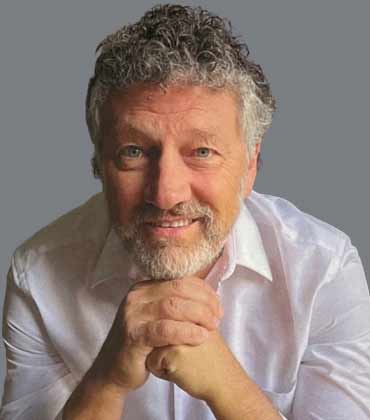
William Sieber
I help others maximize their health and well-being and I train others how to do this as well. I provide inspirational and value laden Keynote presentations, as well as provide customized workshops for organizations striving to be better! I conduct translational research to provide evidence based medicine in real-world primary care settings, and educate others how to do the same. I mentor and coach healthcare professionals on achieving a higher level of professional success. For those who feel stuck or burned out I help serve as a thought partner to energize, expand, or redirect their career in a short-term, organized, and effective manner.
For Elder Care Review’s upcoming edition, we would like William Sieber, Director & Division Chief of Integrated Behavioral Health at UC San Diego, to share insights on leadership based on the experience gathered in the industry. Using the talk points in the questionnaire below, we can either set up an interview, or you can provide written responses. These insights will be crafted into a thought-leadership editorial piece, offering invaluable guidance and foresight to fellow senior-level decision-makers and CXOs.
1. You’ve dedicated your career to improving health and well-being through integrated behavioral health. What inspired your initial path into this field, and how has your approach evolved?
a. I realized I could make a greater impact by sharing my ideas and knowledge with more people and that this could be accomplished by meeting people where they were at, often presenting in primary care medical clinics. I also realized that more people wanted help to get through a difficult time in their lives rather than spend months or years talking about things in the past, so I tended to focus on helping people develop realistic solutions to their problems.
b. The skills I tend to offer to people the most are coping skills that we never learned in school and often did not have the bets role models growing up as to how to cope with inevitable stressful events and losses. Increasing self-awareness, developing emotional regulation skills, and questioning assumptions we make that limit what options we see going forward are just some of what I often help others develop.
2. You’ve mentored many healthcare professionals throughout your career. What key competencies or mindset shifts do you consider essential for clinicians working at the intersection of mental and physical health?
a. What is important I believe for developing competent healers is to appreciate that most all things are multifactorial only determined. Fancy way of saying there are no simple solutions, as improving things usually means addressing a number of different factors that may be more within our control than we realize. This is especially true in terms of being able to control our thoughts and emotions in ways we were never educated on when we were young.
The goal isn’t to analyze the past it’s to equip people with the skills and support they need to move forward, with clarity, compassion, and confidence.
b. What is also important is to get early career professionals to understand that helping people change for the better requires less insight than is often promoted in graduate school. Insight is necessary to some degree but clearly not sufficient for people to improve their lives. What mental health care providers need to realize is that most of us want help in changing things quickly, not analyzing the past that may provide an ‘aha’ moment.
3. What are some of the key challenges you currently face in integrating behavioral health into traditional healthcare systems, and how are you working to overcome those challenges?
a. A major challenge these days is to improve access to the services we provide. Making psychological services available without stigma is critical and in addition to the financial aspects that could be a challenge for many people, getting more and more people to realize the therapists are simply human beings trying to help people through difficult times, and not trying to analyze or judge them.
b. Another challenge is that while changing many medical professionals still separate mind from body despite all the evidence that stress affects our physical health and our physical health can also introduce stress. There is ample evidence showing that if we address the emotional wellbeing of those struggling with chronic illness, their chronic illness are better managed.
4. You’re known for your value-driven keynotes and customized workshops. What themes or topics resonate most with healthcare organizations aiming to improve team cohesion and performance?
a. People often tell me that my presentations have tremendous credibility because of my research background and experience, but most of all that I take evidence-based ideas and translate them into implementable actions. For example, when I give presentations on caregiver stress syndrome I go into detail as to what we know will help improve people’s resilience to stress, increase the chance they can experience “ post traumatic growth“, and how to overcome the barriers of getting more help from those around us to deal with loved ones who are in declining health. Practical ideas and strategies for action, not just information, is what matters!
5. Based on your experience mentoring clinicians and leading integrated care programs, what advice would you give healthcare professionals striving to create meaningful, sustainable impact in elder behavioral health?
a. One important component of creating a sustainable impact is to set realistic expectations. Once the provider and patient agree on what is achievable in a certain time frame then they can more easily become “thought partners“ and work on how to resolve real world problems by collaborating on identifying the barriers to change and the resources needed to move forward.
If you wish to contribute further information that you think will help us enhance the article, please feel free to share it with us.
The presentations I provide give strategies to dozens or hundreds of people at a time. It need not involve individual counseling to improve one’s emotional well-being as well as those who we may be caring for! Social isolation and loneliness is the most common consequence of being a family caregiver. Addressing this and helping people feel part of a community is key !
The articles from these contributors are based on their personal expertise and viewpoints, and do not necessarily reflect the opinions of their employers or affiliated organizations.
