Thank you for Subscribing to Healthcare Business Review Weekly Brief
× 
Healthcare Business Review Weekly Brief
Be first to read the latest tech news, Industry Leader's Insights, and CIO interviews of medium and large enterprises exclusively from Healthcare Business Review
COVID's Unexpected Consequences On Technology
Healthcare Business Review
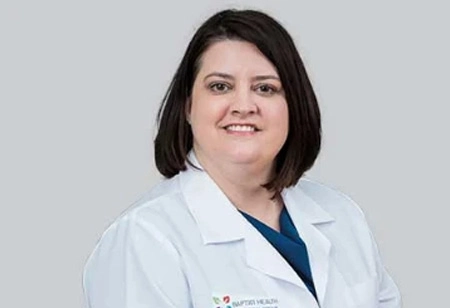
The coronavirus has dominated every aspect of our lives for over a year. Initially, it was fear of the unknown while watching foreign colleagues fight to contain the disease. In pulmonary medicine, we saw firsthand how swiftly and indiscriminately it affected the most vulnerable populations and were thankful for training that prepared us for high stress situations and the long work hours we faced. Throughout the pandemic, we stayed motivated knowing the healthcare industry would see positive changes from this tragedy. As vaccine availability increased, we saw COVID-19 cases decline illustrating how new technology can transform healthcare and our world for the better. Reflecting on the last year, I appreciate how healthcare has used technology to adapt our delivery of care and improving efficiency while remaining patient focused.
At the pandemic onset, we were focused on taking care of a large volume of high acuity patients with a finite number of clinicians especially pulmonologists and intensivists. According to the National Institutes of Health, there was already a projected shortage of 1,400 pulmonologists in the US by 2025 with 70% of them over the age of 55. (AAMC, June 2021) At Baptist Health, we promptly increased our tele-health capabilities by utilizing telemedicine carts to evaluate and communicate with patients remotely. In facilities with a high number of
COVID-19 cases, they used Bluetooth stethoscopes to further minimize clinician exposure preventing significant staffing shortages. We have been able to expand our outpatient capabilities and are piloting TytoCare, a camera device that enhances examination capabilities with an otoscope, stethoscope, and thermometer. At hospital discharge, we have the means of remote patient monitoring with wearable oximeter devices to prevent readmissions and aiding in early detection of COPD exacerbations. This pivot to fully embracing tele-health will be instrumental in the future of our specialty given the aging patient population increasing demand coupled with the expected physician shortages.
As an industry, we wanted to meet patient’s primary care and preventative needs while appreciating their desire to maintain social distancing. We had to re-think the patient experience from start to finish. This meant eliminating traditional waiting rooms, leveraging technology to register patients from their vehicles and increasing outpatient virtual visits. We have come a long way in a short time frame, but there are more opportunities for information technology (IT) teams to enhance our outpatient experience for both patients and physicians. From a pulmonary perspective, remote monitoring for appropriate CPAP use, adherence to prescribed inhaled steroids, frequency of rescue inhaler use and peak flow measurements could improve chronic condition outcomes and give early warning signs of impending exacerbations. These tools will help physicians make personalized care plans while enhancing.
“We have come a long way in a short time frame, but there are more opportunities for information technology (it) teams to enhance our outpatient experience for both patients and physicians”
patient engagement. These IT initiatives allow physicians and patients to connect from anywhere and prevent patients from delaying care over their infection concerns in public spaces. I believe that this is only the beginning of enhancing our ability to give quality care virtually and I expect that our technology options will expand exponentially over the next few years.
The coronavirus has impacted every American and most often in ways that we could never have imagined. I choose to see the positive influence it had in my specialty and the healthcare industry. Personally, it reinforced that choosing this field allows me to positively impact critically ill patients and the importance of family. As an industry, it forced us to reevaluate how we deliver care from a patient and physician perspective, think beyond the traditional waiting room and seek out better technology to deliver high quality care. I am excited to see what the future holds!


Management of First-Time Patellar Dislocation: A New Consensus Based Approach to Treatment
Lars Blond, Senior Orthopedic Surgeon, Aleris Danmark
Uncovering the Genetics Underlying Rare Diseases
Francesc Palau, SJD Distinguished Investigator, Sant Joan de Déu Children’s Hospital and Research Institute, and CIBERER
Electronic Procurement for Implants: Let's Do This!
Jack Koczela, Vice President Supply Chain, Froedtert Health
Telemedicine for Obstetric Care: A Fantasy or the Wave of the Future?
Veronica Gillispie-Bell, MD, MAS, FACOG, System Medical Director of Health Outcomes, Ochsner Health