
Thank you for Subscribing to Healthcare Business Review Weekly Brief
× 
Healthcare Business Review Weekly Brief
Be first to read the latest tech news, Industry Leader's Insights, and CIO interviews of medium and large enterprises exclusively from Healthcare Business Review
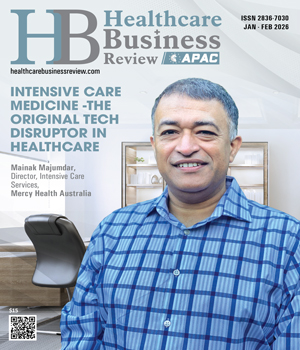
Intensive Care Medicine, by its very nature, has been both technology-reliant and datarich as a specialty from its inception. Born amid a public health crisis, practitioners in this area have often been forced to innovate in desperate circumstances, developing and adopting emerging technologies that are now taken for granted, to manage severely disordered body systems and evaluate the effectiveness of therapies in real-time at the bedside. Amidst the ubiquity of Intensive Care support in modern hospitals, it is hard to remember that as a specialty, it is not even a century old. Its history is a litany of disruptors incorporating technology into clinical practice in unconventional ways. Back in 1952, with Copenhagen in the grip of a polio epidemic and paralysis of the breathing muscles a death sentence, Bjorn Ibsen decided to administer positive pressure ventilation through a plastic tube into the windpipe of a dying 12-year-old outside of an operating room environment. She recovered, and the hospital went on to replicate this practice for paralyzed polio patients across specially designated wards, mortality dropped from over 87 percent to under 15 percent and a new medical specialty was born. The desire to figure out whether the ventilator was working effectively triggered the re-exploration of gas laws, applied thermodynamics and electrochemistry from the 17th to 19th centuries using technologies developed around World War II and culminated in Severing Haus and Bradley’s development of the first blood gas machine, still on display at The Smithsonian. Blood gas analysis and interpretation, much to the chagrin of medical students everywhere, has since become integral to many areas of clinical practice outside the ICU! When Werner Forssman got himself expelled from medical practice in Berlin for having the temerity to run a long flexible tube up his arm veins to his heart despite prohibitions from his superiors (and then bragging about it in a me...Read more
Top Plastic Surgery Regenerative Medicine Service in APAC 2026
In cosmetic medicine, regenerative treatments have the potential for transformative results. Many clinics opt for artificially induced methods to stimulate stem cell division, often using synthetic materials that can carry unpredictable risks. Dr. Hiroo Kuno, founder of Kuno Clinic, redefines what is possible in rejuvenation treatments. In 2007, he introduced ... Read more

Spine Care
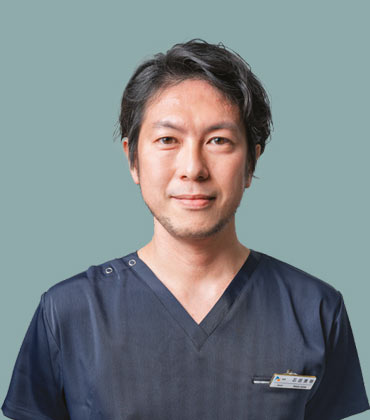
Innovative Approach to Spine Care Nonaka Lumbago Clinic (NLC) is at the forefront of providing advanced treatments for spinal disorders, offering cutting-edge, minimally invasive options that address disc-related spine conditions. Dedicated to improving patients’ lives, the clinic strives to avoid both the risks of unnecessary invasive surgery and long-term reliance on pain medic... Read more
Medical Device Cybersecurity
As 2021 drew to a close, 51-year-old cybersecurity industry veteran and adventurist Christian Espinosa was the epitome of success and good health. Professionally, he had achieved significant success when he sold his first company, Alpine Security, in 2020. Personally, he maintained a physically demanding and active lifestyle, competing in Ironman triathlons and conquering mountain peaks. However, everything changed in February 2022 when he developed blood clots in his left le... Read more

CXO INSIGHTS

Director of the Cosmetic and Reconstructive Center
Henri P. Gaboriau, MD, FACS, Head of Department ENT/Facial Plastic and Reconstructive Surgery, Adirondack Health
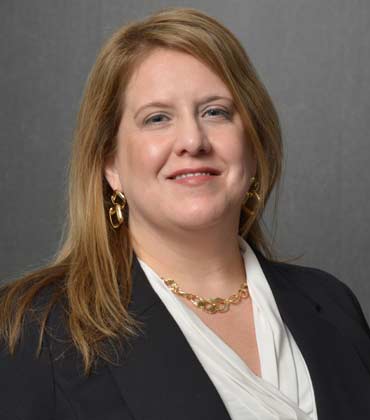
Advancing Heart Failure Patient Care Excellence
Tara Hankins, Vice President of Surgical Services, Deborah Heart and Lung Center

Harnessing Emotional Intelligence in Nursing Leadership
Whitney Johnson, Clinical Supervisor, and Group Reflective Practice Facilitator, Alfred Health

Journey of a Clinical Nurse Manager: Overcoming Challenges and Enhancing Patient Experience
Janene Lawrence, Clinical Nurse Manager (Medical), Hutt Valley DHB
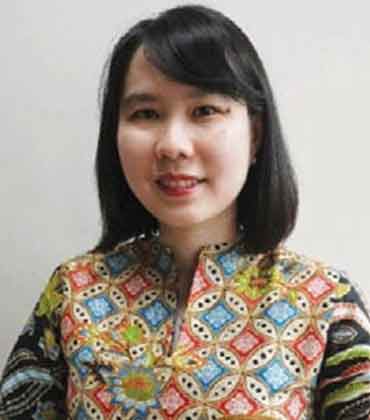
Emerging Diagnostic Technologies in Healthcare
Winny Xie, Molecular Predictive & Diagnostic Lab Head, PT Prodia Widyahusada Tbk

IN FOCUS
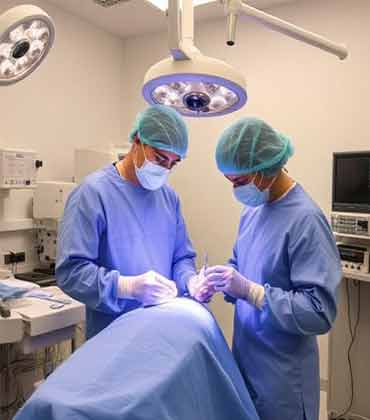

Advancements in Regenerative Medicine in APAC
Regenerative medicine in APAC is advancing rapidly through stem cell therapies, tissue engineering, and gene editing, driving innovation in healthcare while addressing unmet medical needs.
EDITORIAL
Transforming Aesthetics with Regenerative Medicine
Regenerative medicine is reshaping plastic surgery across the APAC region, shifting the industry from artificial augmentation to biologically driven, patient-centered solutions. This edition explores how safety, clinical rigor, and lasting outcomes are redefining aesthetic and reconstructive care.
At the center of this discussion is Kuno Clinic, recognized as the Top Plastic Surgery Regenerative Medicine Service in APAC 2026. Led by Dr. Hiroo Kuno, the clinic has distinguished itself through its in vivo regenerative medicine approach, introduced in 2007, which replaces excisional surgery and synthetic materials with autologous solutions using adipose-derived stem cells, platelet-rich plasma, and targeted nutritional support to enable controlled, natural tissue regeneration. This model directly overcomes the short-lived and often unnatural outcomes associated with conventional facelifts and thread lifts.
Kuno Clinic’s long-term impact is defined by technical precision and continuous refinement. Through advanced adaptations of VASER ART 4D technology for regenerative use, it has expanded the scope of aesthetic correction, from revising unsuccessful procedures to achieving durable rejuvenation across the face and body. A consistent focus on minimal incisions, avoidance of foreign substances, and end-to-end surgical oversight underscores its commitment to safety and patient-specific outcomes, firmly establishing its leadership in regenerative aesthetics.
This issue also features CXO perspectives that provide context for innovation across the broader healthcare ecosystem. Winny Xie, Molecular Predictive and Diagnostic Lab Head at PT Prodia Widyahusada Tbk, examines how molecular diagnostics, sequencing technologies, and advanced laboratory capabilities are improving prognostic accuracy while managing cost and operational complexity. In parallel, Janene Lawrence, Clinical Nurse Manager (Medical) at Hutt Valley DHB, addresses how we must demonstrate a culture of kindness within ourselves and have the courage to move in directions that will allow opportunities to grow health professionals and always put the people first.
Collectively, these narratives highlight how leadership, clinical rigor, and thoughtful innovation are shaping the future of healthcare. Readers are encouraged to explore the full articles to better understand how regenerative medicine and strategic stewardship continue to raise standards across the industry.
