
Remote Monitoring Solutions In Europe | Healthcare Business Review APAC
Healthcare Business Review
About UsConferencePartner With Us
  • Patient Care
    Medical Transportation
    Plastic Surgery
    Regenerative Medicine
    Therapy Services 
  • Operations
    Consulting Service
    Digital Transformation
    Financial Services
    Healthcare Insurance
    Healthcare Marketing
    Healthcare Outsourcing
    Healthcare Staffing
    Medical Billing
  • Healthcare Services
    Facility Management Services
    Healthcare Education
    Healthcare Procurement
  • Leadership Perspectives
  • Insights
  • News
  • Magazines
  • CXO Awards
    • APAC
      • US
      • EUROPE
      • APAC
      • CANADA
      • LATAM
×
#

Healthcare Business Review Weekly Brief
Be first to read the latest tech news, Industry Leader's Insights, and CIO interviews of medium and large enterprises exclusively from Healthcare Business Review

Subscribe

loading

Thank you for Subscribing to Healthcare Business Review Weekly Brief

Healthcare Tech Europe

Remote Monitoring Solutions in Europe

Remote monitoring solutions help organizations track environments and health indicators from connected digital systems. With a focus on real-time alerts, data visibility, system reliability and response readiness, they support earlier intervention and more efficient oversight.

Solutions
Newcard: Bringing Human-Centered Care to Remote Monitoring
Newcard
Bringing Human-Centered Care to Remote Monitoring
Pierre-Emmanuel Bonnet, CEO
Chronic disease management requires continuous visibility into patients’ health between clinical visits. Without ongoing insight into changes in a patient’s condition, opportunities for early intervention can be missed.
Read more
State of Industry

Unlocking Efficiency: The Power of Remote Monitoring Solutions across Europe

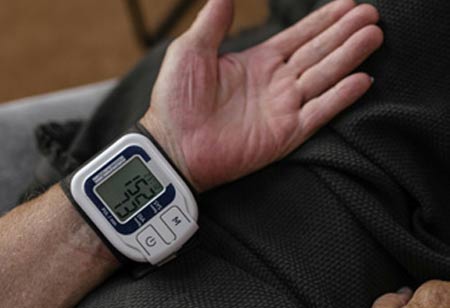
Remote monitoring solutions have moved from necessity to a strategic component of European healthcare delivery. Connected blood pressure cuffs, glucose sensors, pulse oximeters, wearables, implantable devices and patient apps now transmit information from homes to clinical teams, supporting earlier intervention and fewer visits.

Read more
Deep Dive

Remote Monitoring Built Around Care-Team Workload

The biggest challenge in remote monitoring is rarely the device itself. It is what happens after the data comes in. Home readings often end up in busy clinics, patients lose engagement, connectivity fails and alerts arrive without enough clinical context. For digital health executives, the goal is not more data but better use of clinicians' time while keeping vulnerable patients connected between visits. A platform can collect blood pressure, weight, oxygen readings and symptom updates, yet still leave physicians filtering out noise instead of spotting patients who need attention. The real measure of success is whether home data leads to earlier clinical intervention.

Read more
Leadership Perspective
The Application of Remote Monitoring technology in the Management of Heart Failure Patients
Northeast Georgia Health System
The Application of Remote Monitoring technology in the Management of Heart Failure Patients
Ugochukwu O. Egolum, MD, FACC,Program Director (Founding), Cardiology Fellowship Program

Heart failure is a disease of the heart muscle that results in weakening of its pumping function. Put simply, heart failure means the heart is not able to pump enough blood to meet the body’s needs. In fact, heart failure is a common condition, affecting as many as five to six million U.S. adults. Patients with heart failure often struggle with related conditions or symptoms that can be challenging to develop an effective treatment plan for and have a major impact how they feel day-to-day. The care of these patients is complex, time and labor intensive requiring a specialized team of experts to appropriately take care of them. In the USA, the total cost of care (direct and indirect costs) for HF in 2020 was estimated at $43.6 billion. On in-dept review it is clear that hospitalization costs are the key driver of heart failure-related costs, which has led to great emphasis on interventions to reduce admissions and readmissions. One such intervention is the application of remote monitoring technology.

Read more

Remote Monitoring Solutions in Europe Info

Q1
What Do Top Remote Monitoring Solutions Help Healthcare Organizations Do?
Top Remote Monitoring Solutions help healthcare organizations observe patients beyond traditional in-person visits by collecting relevant health information from homes and other nonclinical settings. They can support ongoing oversight, timely follow-up and better continuity of care. For clinical teams, the category is especially relevant when patients need regular monitoring without frequent travel or repeated hospital-based checks. It can also help organizations extend structured support across wider geographic areas while maintaining clear clinical accountability.
Q2
What Capabilities Are Commonly Included in Remote Patient Monitoring Solutions?
Top Remote Monitoring Solutions commonly include connected devices, patient-reported information, dashboards, alerts, communication tools and workflow support. Depending on the use case, they may also provide onboarding, care coordination, escalation pathways and integration with existing clinical systems. The strongest remote patient monitoring solutions are designed around clear responsibilities so data reaches the right care professional at the right time. Programs may be tailored by condition, risk level, care setting and the patient’s ability to use digital tools independently.
Q3
Why Is Demand Growing for Top Remote Monitoring Solutions?
Demand for Top Remote Monitoring Solutions is rising as healthcare systems manage more chronic conditions, aging populations, workforce pressure and the need for care outside hospitals. Patients and families also expect more convenient ways to stay connected with care teams. Adoption is strongest when remote monitoring improves access while giving clinicians usable information rather than adding avoidable administrative work. Reimbursement models, digital health investment and greater familiarity with virtual care are also encouraging broader consideration of these solutions.
Q4
How Are Leading Remote Monitoring Providers Evaluated?
Top Remote Monitoring Solutions are evaluated on clinical relevance, ease of use, data quality, security, interoperability, patient engagement and implementation support. Healthcare decision-makers also consider whether a solution fits existing workflows, helps control alert volume and can scale across different patient groups. Service responsiveness, training and measurable performance are often as important as the underlying technology. Evaluation should also address device logistics, patient inclusion, governance and the provider’s ability to support change after deployment.
Q5
How Do Remote Monitoring Services Create Value for Patients and Providers?
Top Remote Monitoring Solutions create value by supporting earlier awareness of changes in a patient’s condition, more consistent follow-up and better-informed care decisions. For patients, this can reduce unnecessary travel and make care feel more continuous. For providers, well-designed remote monitoring services may help focus clinical attention, reduce avoidable workload and strengthen care coordination across settings. The practical value depends on whether the service improves engagement without creating confusion, excessive alerts or fragmented responsibilities.
Q6
What Role Do Technology and Clinical Expertise Play in Remote Monitoring?
Top Remote Monitoring Solutions depend on both reliable technology and sound clinical design. Devices and software must collect and present information accurately, but care pathways, alert rules and escalation processes determine whether that information is useful. Innovation in virtual care platforms, analytics and system integration matters most when it improves usability, supports professional judgment and keeps patients actively involved. Human support remains essential for onboarding, troubleshooting and helping different patient groups participate with confidence.
Healthcare Business Review APAC
Follow on LinkedIn

About

  • Home
  • About Us
  • Partner With Us

Stay Connected

  • Subscribe
  • Newsletter
  • Sitemap

Contact Us

  • editorial@healthcarebusinessreview.com
  • salesus@healthcarebusinessreview.com
  • marketingus@healthcarebusinessreview.com

Legal

  • Editorial Policy
  • Privacy Policy
  • Terms of Use

© 2026 Healthcare Business Review APAC. All rights reserved. Headquarteblue in Fort Lauderdale, FL, USA.

CLOSE

Specials

I agree We use cookies on this website to enhance your user experience. By clicking any link on this page you are giving your consent for us to set cookies. More info

This content is copyright protected

However, if you would like to share the information in this article, you may use the link below:

https://www.healthcarebusinessreviewapac.com/a/remote-monitoring-solutions-in-europe