
Thank you for Subscribing to Healthcare Business Review Weekly Brief
× 
Healthcare Business Review Weekly Brief
Be first to read the latest tech news, Industry Leader's Insights, and CIO interviews of medium and large enterprises exclusively from Healthcare Business Review
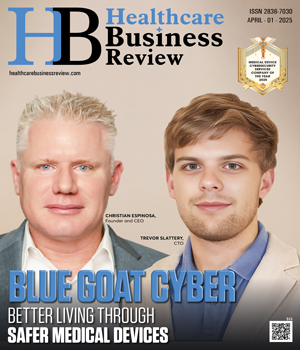
As 2021 drew to a close, 51-year-old cybersecurity industry veteran and adventurist Christian Espinosa was the epitome of success and good health. Professionally, he had achieved significant success when he sold his first company, Alpine Security, in 2020. Personally, he maintained a physically demanding and active lifestyle, competing in Ironman triathlons and conquering mountain peaks. However, everything changed in February 2022 when he developed blood clots in his left leg. This near-disaster was narrowly averted with a timely diagnosis, transforming what could have been tragedy into a pivotal moment. What first appeared as sheer luck soon revealed itself as a deeper calling. Rewind to 2014: Alpine Security was a cybersecurity powerhouse providing solutions across various systems, including medical devices— the very devices that would play a crucial role in saving Espinosa's life years later. Recognizing this as a sign from the universe, Espinosa was inspired to focus on securing these life-saving devices from cyber vulnerabilities. This led to the creation of Blue Goat Cyber, a company dedicated to medical device cybersecurity. “I want to make sure that these devices, which enhance and save patient lives, stay on the market,” says Espinosa, founder and CEO of Blue Goat Cyber. Unique Needs Of A Critical Sector The challenges in medical device cybersecurity go beyond traditional data theft concerns and pose direct threats to patient safety. Unlike conventional cybersecurity, where the risks center on unauthorized disclosure of sensitive information, vulnerabilities in medical devices can have lifethreatening consequences. Implantable devices like defibrillators could be remotely manipulated to deliver fatal shocks, while diagnostic systems might produce inaccurate readings, leading to untreated and potentially fatal conditions. Even devices like med spa lasers can be maliciously manipulated to cause severe harm, such as burns from intensified lasers with disabled cooling mechanisms. These risks highlight the need for robust cybersecurity measures tailored to medical devices. The stakes extend beyond safeguarding information to preventing harm, misdiagnosis, and fatalities. Compounding this is the complexity of regulatory compliance, such as FDA and EU MDR clearances, which require meticulous documentation, risk management, testing, and software analysis. Ensuring that innovative healthcare solutions reach the market securely demands expertise and precise processes. ...Read more
Vein Specialists of Alaska, led by Dr. David G. Smith, is an example of excellence in treating venous disorders. With over 25 years of experience as a board-certified cardiologist and 15 years specializing in venous disease, Dr. Smith brings unparalleled expertise and dedication to his practice. From its inception, the clinic has been committed to restoring health and enhancing the quality of life for patients suffering from chronic venous conditions. Dr. Smith’s journey i... Read more


In Mid-Missouri, public transportation is often located far from residential areas, making healthcare access exclusive and challenging. Jordan and Chance are both from Central Missouri and have witnessed firsthand the disparities rural communities face when accessing healthcare. Determined to improve access to medical transportation in remote areas, they founded United Care Transport (UCT). With Jordan’s expertise in healthcare and Chance’s decade of military service, they combined their... Read more
CXO INSIGHTS

Importance of Proper Protocol in Hospital Patient Transportation
Ernest Verdecia, Associate Director of Centralized Transportation, Jackson Health System

Leading the Future of Radiology: A Journey of Innovation and Growth
Vidal McNeal, Radiology Manager, Shirley Ryan AbilityLab

Vascular Surgeon Dedicated To Personalized, Transformative Care
Gabriel Wallace, M.D., Vascular Surgeon, Northwestern Medicine

Optimizing Healthcare through Technology: A Path to Improved Patient Adherence, Compliance, and Outcomes
Nick West, MD, Chief Medical Officer and Divisional Vice President of Global Medical Affairs;Connie Baumgard, MSc, Director, U.S. Medical Affairs, Abbott’s Vascular Business


IN FOCUS
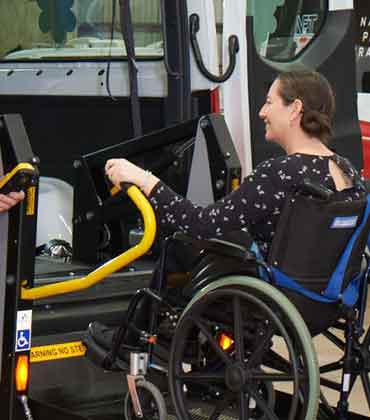
Ensuring Access: The Critical Role of Non-Emergency Medical Transportation
Medical needs are unavoidable; emergency care is essential, and emergency care also requires equal importance.

Building Resilience: Proactive Measures in Medical Device Cybersecurity
Recent advancements in medical devices have transformed the healthcare industry, improving patient care, enhancing diagnostic accuracy, and adding value to medical procedures.
EDITORIAL
Embracing Emerging Technologies in Healthcare
The healthcare industry stands at the crossroads of innovation and necessity, evolving at a pace that mirrors society’s growing demands. Advances in technology, shifting patient expectations and regulatory landscapes are shaping a more interconnected, secure and patient-focused system.
In this edition of Healthcare Business Review, we explore the recent developments in the healthcare industry and how companies harness cutting-edge technologies to stay ahead.
Healthcare’s increasing reliance on interconnected medical devices has ushered in a new era of patient care that allows doctors to track health metrics in real-time and intervene before crises arise. While these technological advancements have presented great opportunities for innovation in healthcare, they have also exposed the industry’s susceptibility to malicious actors. Cyberattacks targeting medical devices have escalated, turning life-saving technology into potential weapons. In response, hospitals and medical device manufacturers are prioritizing cybersecurity as much as patient safety, implementing AI-driven threat detection and blockchain technology to secure patient data.
The integration of technologies has also been a game-changer in nonemergency medical transport (NEMT), which has long been a lifeline for seniors, individuals with disabilities and patients undergoing long-term therapies, who often face significant transportation challenges to access healthcare. To make patient transport more seamless and cost-effective than ever, companies are now leveraging ride-sharing models and AI-driven logistics. Healthcare providers are integrating NEMT platforms with electronic health records, facilitating patients to book rides as conveniently and quickly as they schedule appointments.
As technologies continue penetrating every facet of healthcare, they are rapidly transforming treatment procedures by enabling early detection, streamlined workflows and better patient engagement. The result is improved efficiency and better outcomes. For instance, treatment options for varicose veins were invasive, painful or required lengthy recovery periods for decades, discouraging many from seeking help. The narrative is changing with the rising prominence of least invasive treatments like endovenous laser ablation, endovenous radiofrequency ablation and ultrasound-guided sclerotherapy, which offer quicker procedures with minimal downtime.
The healthcare industry is collectively shifting toward a more secure, accessible, patient-centric system. Whether protecting medical devices from cyber threats or redefining the way conditions like varicose veins are treated, healthcare’s future is about meaningful change and impact.
We hope this edition of Healthcare Business Review helps you find the right partner for your business requirements.
