
Thank you for Subscribing to Healthcare Business Review Weekly Brief
× 
Healthcare Business Review Weekly Brief
Be first to read the latest tech news, Industry Leader's Insights, and CIO interviews of medium and large enterprises exclusively from Healthcare Business Review
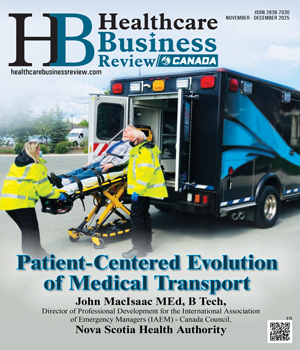
John (J.J.) MacIsaac MEd, B Tech, Advanced Care Paramedic, is the Nova Scotia Health Emergency Preparedness Manager—Projects and Planning. He previously worked for over 25 years as an Advanced Care Paramedic in the Emergency Health Services System for the province of Nova Scotia. In addition to his role with Nova Scotia Health, J.J. serves as the Director of Professional Development for the International Association of Emergency Managers (IAEM)— Canada Council. Through this article MacIsaac talks about the evolution of medical transport systems. He contrasts the early days of simple transportation with the current sophisticated approach that emphasizes patient-specific care, specialized teams and expanded scope of practice for field providers. I began my paramedic career in the early 1990's at a time when the prehospital system in my home province of Nova Scotia consisted of a variety of ambulance operators, which included those affiliated with funeral homes, taxi companies and the old adage "you call, we haul" epitomized the straightforward approach of medical transport. Historically, this phrase reflected a time when the primary role of emergency medical services (EMS) was to transport patients to the nearest hospital as quickly as possible. However, the healthcare system's technological advancements have rendered this simplistic model obsolete. This culture shift is thanks to many visionaries like Dr. Ron Stewart, a key player in modernizing EMS systems across North America and highly influential globally. Today's medical transport systems embody a more nuanced and sophisticated approach, emphasizing patient-specific care, efficient resource allocation, and innovative treatment modalities....Read more
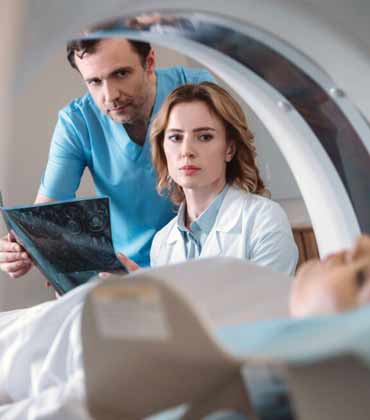
Top Teleradiology Consulting Service in Canada 2025
Teleradiology is the backbone of modern diagnostics, connecting radiologists and clinicians to deliver insights that save lives. But rising imaging volumes and complex cases are pushing the departments to their limits. Too often, they rely on legacy systems that require manual processes, lack interoperability and create digital silos. As the systems fall short of delivering the requirements of modern care, radiologists are burdened with heavier workloads, while clinicians wait longer for accurate... Read more

Home Healthcare Services

During her tenure at a home care company, Sophia Vu, serving as the CEO and Director of ONcares Home Care & Nursing Services, encountered a recurring challenge that profoundly impacted both clients in need of support and caregivers eager to provide it. Despite the mutual desire for connection and support, a gap persisted, leaving clients without the adequate care they deserved and caregivers disheartened in their noble mission. Delving into the heart of this challenge... Read more
CXO INSIGHTS

Leading the way in medical imaging innovation
Jim Tsourgiannis, Director, Medical Imaging and Laboratory Services, Mackenzie Health

Strategies For Success: Transforming Challenges Into Achievements In Home Healthcare
Vannett Hamilton, Director of Nursing, Extendicare

Fostering Growth in Healthcare Through Effective Leadership
Zachery Seow, MBA, CRA, R.T.(R)(CT)(MR)(ARRT), Director of Radiology Operations, IS & Strategy, Stanford Medicine Children’s Health

Challenges and Strategies in Radiology Management
Bryan Alexander, Administrative Director of Radiology, OU Health
Too Many Scans Do More Harm Than Good
Madison Haberl, R.T(R), Director of Radiology, St. Anthony Regional Hospital

IN FOCUS
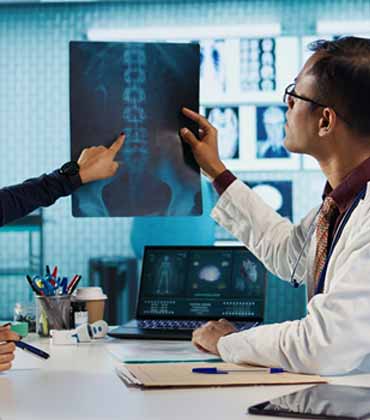
Elevating Patient Care in Canada: The Benefits of Teleradiology Consulting
Teleradiology consulting services enhance healthcare by improving diagnostic access, ensuring data security, and promoting innovation and collaboration for providers, patients, and stakeholders worldwide.

Canada's Teleradiology Innovations: Improving Access and Diagnostic Accuracy
Teleradiology consulting in Canada expands through advanced tools, stronger workflows, enhanced collaboration, and broader access, improving diagnostic accuracy and nationwide healthcare delivery.
EDITORIAL
Patient-Centered Evolution of Medical Transport
The rapid evolution of medical imaging is reshaping how health systems manage growing diagnostic pressures, and teleradiology has quietly become one of the most influential forces behind this shift. As hospitals grapple with rising case volumes and uneven access to radiology specialists, the demand for dependable remote reporting continues to climb.
Against this backdrop, some of the most trusted teleradiology consulting services are emerging from Canada, where the sector has seen rapid technological and professional advancement. These firms pair experienced, board-certified radiologists with secure, high-speed reporting platforms, allowing physicians to receive timely interpretations even during peak hours or overnight gaps. The result is a system that supports frontline clinicians while maintaining the accuracy patients depend on.
What distinguishes Canada’s leading providers is not just their technical capability but their collaborative approach. Rather than operating as distant vendors, they embed themselves into hospital processes, offering subspecialty insights, transparent communication, and round-the-clock availability. The partnership model has proven especially valuable for rural and underserved regions, where access to expert radiology can be inconsistent.
This edition of Healthcare Business Review Canada turns its focus to the organizations redefining this field. Through in-depth profiles and expert insights, the issue explores how leading teleradiology consultants are expanding access, improving response times, and supporting clinical teams for a more connected and resilient healthcare system across the country.
We hope this edition provides readers with meaningful insights into the forces reshaping teleradiology today. By examining the achievements and emerging practices of Canada’s leading consultants, we aim to guide healthcare decision-makers, spark informed dialogue, and highlight how remote radiology is becoming an essential driver of timely, equitable, and high-quality patient care.
