
Thank you for Subscribing to Healthcare Business Review Weekly Brief
× 
Healthcare Business Review Weekly Brief
Be first to read the latest tech news, Industry Leader's Insights, and CIO interviews of medium and large enterprises exclusively from Healthcare Business Review
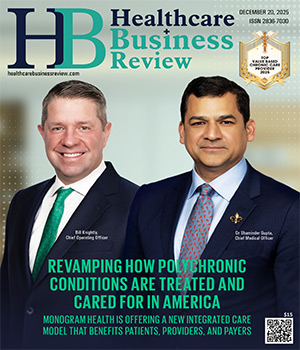
Medical collaboration typically ends with care coordination among healthcare professionals. Monogram Health redefines the concept of integrated care by bridging the gap between those who pay for care, those who deliver care, and those who live with the outcome. Monogram calls it ‘whole-system integration.’ Its model aligns clinical action, financial responsibility, and human impact within one ecosystem. True integration, according to Monogram’s leadership team, doesn’t happen within the walls of a clinic. It depends on the understanding, commitment, and alignment of three key stakeholders: patient, provider, and payer. Bridging the gaps between patients, providers and payers is no small task; it requires a comprehensive, home-based, interdisciplinary treatment model. As an advanced multispecialty, value-based chronic care provider, Monogram brings specialty-level care directly to a patient’s home. Monogram assumes full risk for both cost and outcome, which enables a more connected and transparent healthcare model that is structured to align incentives across all stakeholders. That alignment has long been the missing link. Patients with multiple chronic conditions were left to navigate a maze of specialists, repeating their medical histories at every stop. Providers have worked in silos, with limited visibility into the broader picture of a patient’s health. And payers have continued to fund care without a full understanding of what truly drives patient outcomes....Read more
Top Heor Evidence Generation Firm 2025
When healthcare innovators bring new diagnostics, medical devices, or pharmaceutical therapies to market, they often face the same challenge: the evidence required by payers does not yet exist. Dream Big Health (DBH) specializes in bridging the gap by generating credible, payer-ready evidence for both MedTech and pharmaceutical companies, especially those with first-in-class or h... Read more

CXO INSIGHTS

Importance of Proper Protocol in Hospital Patient Transportation
Ernest Verdecia, Associate Director of Centralized Transportation, Jackson Health System

Automating Professional Billing
Candace Omija, Manager, Professional Billing and Coding, the Queen's Health System

Elevating Nursing through Compassion and Care
Lena Gorman, Nursing Case Manager, Faith Medical Services Inc

Ways to Avoid Sports Injury
Julio Martinez, Medical Director, Baystate Health

How Nurses Can Sustain Hospitals amid Reimbursement Challenges
Justin Floyd, Director of Nursing- Critical Care Service Line, Peace Health


IN FOCUS

Importance of HEOR Evidence Generation Firms
HEOR evidence generation firms strengthen healthcare decisions by providing data-driven insights into treatment value, improving patient outcomes, and guiding healthcare organizations toward sustainable growth.

Patient-Centric Approaches: Advancements in HEOR Evidence Generation
HEOR evidence generation firms enhance healthcare decisions through real-world data, advanced analytics, solutions for challenges, and collaborative value-driven opportunities.
EDITORIAL
Navigating Change in the Healthcare Landscape
The healthcare industry is experiencing a rapid evolution, driven by technological advancements, patient-centric models of care, and the ongoing shift toward valuebased solutions. As the landscape grows more complex, healthcare providers and organizations are faced with the challenge of adapting to these changes while maintaining high standards of care and operational efficiency.
A growing focus on managing chronic conditions has brought value-based care models to the forefront. Providers are now expected to prioritize long-term patient outcomes rather than the volume of services delivered. This shift means that managing chronic diseases such as diabetes, cardiovascular conditions, and respiratory disorders is more critical than ever. By offering coordinated, continuous care, healthcare providers are reducing hospital readmissions and improving quality of life for patients, while also controlling costs for payers.
Simultaneously, health systems and pharmaceutical companies are increasingly relying on HEOR evidence to assess the effectiveness of treatments and interventions. In a world where reimbursement models are evolving, understanding the economic value of healthcare services is essential. Data-driven insights, derived from real-world evidence and clinical outcomes, are enabling providers and stakeholders to make informed decisions that balance clinical efficacy with financial sustainability. This focus on evidence generation helps streamline resource allocation, optimize patient outcomes, and ultimately, reduce unnecessary expenditures.
As these trends continue to take shape, the healthcare industry is in a constant state of flux, with new opportunities and challenges emerging at every turn. By embracing innovative care models, leveraging data insights and focusing on patient outcomes, the industry is moving toward a future where both the quality of care and cost-efficiency are optimized for all stakeholders involved.
In this edition, we explore the transformative trends reshaping healthcare from the rise of value-based chronic care models to the pivotal role of HEOR in driving informed decision-making. We also highlight the organizations at the forefront of this shift, leading the way toward more efficient, patient-centered care.
