
Thank you for Subscribing to Healthcare Business Review Weekly Brief
× 
Healthcare Business Review Weekly Brief
Be first to read the latest tech news, Industry Leader's Insights, and CIO interviews of medium and large enterprises exclusively from Healthcare Business Review
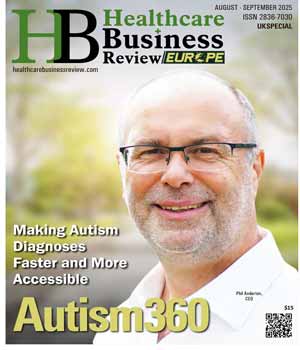
For families that suspect a child has autism, an early diagnosis can make a world of difference. But many public health care systems do not have the capacity to meet growing demand, leading to extended waiting times. In the UK, it is not uncommon for families to wait many months before assessments even begin. Autism 360 was founded to expand access to care by reimagining how diagnoses are delivered. Led by clinical experts in autism and neurodiversity, the clinic responds to rising demand by streamlining the diagnostic journey. It integrates digital self-assessment portals and home-based video consultations with personalised in-clinic care, creating a hybrid model that combines convenience with clinical excellence. The approach is designed to ensure families receive timely, compassionate support. “If demand rises in manufacturing, you open another production line and make processes quicker, cleaner and more efficient. We use the same principles to redesign diagnostic services,” explains Phil Anderton, CEO. “It’s about growing to meet needs, not rationing care.” Autism 360 demonstrates that with the right design, health care services can be both scalable and profoundly human, offering support when it matters most. A Values-Driven Approach Accessing health care for neurodiversity conditions such as autism and ADHD presents two, intertwined challenges. One is visible; navigating long waiting lists that delay diagnosis. The other, less apparent but equally urgent, is the hidden cost to society when neurodiverse individuals go undiagnosed and unsupported. Often, attention focuses narrowly on the price of a diagnostic assessment while overlooking the broader consequences when that diagnosis never occurs. Untreated autism can create cascading challenges across education, employment, social care and public health systems. Shaped by short-term budget considerations, traditional health care tends to prioritise immediate savings over future resilience. “When an organisation faces financial pressure, the first thing often cut is training,” explains Anderton. “But without investing in people, the organisation’s future strength is undermined. In the same way, health care systems face a dilemma. Skipping early intervention for autism may offer short-term relief on paper, but it generates far greater costs across society over time.”...Read more
Top Pain Management in Europe 2025
MIVI Salud is one of Spain’s foremost multidisciplinary pain care providers and it isn’t just treating chronic pain but really redesigning how clinicians approach it. For too long, the standard care model in Spain has been disjointed. Patients have to toggle between appointments, referrals pile up and specialists work in silos. Nearly one in four people in Spain lives with chronic pain, yet t... Read more

CXO INSIGHTS

Navigating the Future: Challenges and Promises of AI in Radiology
Roger Staff, Head of Imaging Physics, NHS Grampian

Transforming Infertility and Pregnancy Support with Digital Tools
Kaisla Lahdensuo, Business director, Specialist care, Meliva Sweden, Mehiläinen

AI - Opportunities in Teaching Healthcare Professionals Today
Gil Figueiredo, Corporate Matron, James Paget University Hospitals NHS Foundation Trust

Advancing Patient Safety Through Technology And Collaboration
Ahmed Hans, Patient Safety Intelligence Manager, Mid Yorkshire Teaching Nhs Trust

Driving Innovations in Healthcare Using AI
Dr James Risley BMedSci(Hons) BMBS MRCS DOHNS GDL LLM FRCEM FFMLM MBA, Deputy Executive Medical Director, Betsi Cadwaladr University Health Board


IN FOCUS

Addressing Chronic Pain: Advances and Challenges in European Healthcare
Current research explores innovative strategies for safe and effective pain relief. The primary objective is to enhance patients' overall quality of life.

Growing Importance of Autism Assessment and Diagnosis in Europe
Autism assessment and diagnosis in Europe are expanding with advanced tools, early intervention programs, and policy support, improving accessibility, accuracy, and timely care across diverse healthcare systems.
EDITORIAL
Advancing Precision in Autism Assessment and Pain Management
Healthcare systems across Europe stand at a turning point. As patient expectations rise, clinicians and care providers face mounting pressure to improve speed, accuracy and personalization in care delivery. The challenge is particularly urgent in autism spectrum disorder (ASD) assessment and pain management, where delays, misdiagnosis and fragmented models have long left critical needs unmet.
For decades, autism diagnosis relied on lengthy in-person evaluations, subjective behavioral checklists and limited access to trained specialists. Pain management often followed a one-size-fitsall approach, constrained by inconsistent coordination and late-stage interventions.
Today, technology-led innovation and cross-disciplinary collaboration are enabling earlier detection, more precise evaluation and tailored treatment strategies. AI-assisted assessment tools, advanced neuroimaging and standardized diagnostic frameworks are reducing wait times and improving accuracy for autism. In pain care, real-time monitoring, multimodal planning and predictive analytics are helping clinicians act before conditions worsen, improving quality of life while reducing reliance on opioids.
This edition of Healthcare Business Review Europe examines how cutting-edge tools and strategies are enhancing diagnostic accuracy and treatment precision.
Roger Staff, head of imaging physics at NHS Grampian, emphasises that AI’s value depends on access to large, high-quality datasets that reflect diverse populations. He adds that strong governance frameworks are essential to protect patient privacy and maintain clinical trust.
We hope this edition provides valuable insight and inspiration as you modernize diagnostic pathways, expand access to personalized care and set new standards for precision in autism assessment and pain management.
